
An Ivey/Ivery Genealogical Research Update | November 26, 2026
More than a decade has passed since I took one of my family's genealogical questions to PBS's Genealogy Roadshow, Season 2, in St. Louis, Missouri. As I revisit some of my original research and continue to investigate the origins of our Ivey/Ivery family, I thought it was important to document where my research stands today.
This will also serve as a point of reference for my family, fellow researchers and the generations who will eventually inherit this work.
Where It Began
The very premise of my participation in Genealogy Roadshow, which aired in February 2015, was to answer two fundamental questions:
How did we acquire the last name of Ivey/Ivery?
Did we descend from free persons of color or were our ancestors enslaved?
My research centered on William and Minta Ivey, the parents of my great-great-grandfather, Isaac "Ike" Ivery, affectionately known throughout my genealogy work as Granddaddy Ike.
I was presented with research findings, the names of potential enslavers, references to estate and probate records, and additional avenues for investigation and their 1865 marriage license.
I have retained those original research papers.What Genealogy Roadshow found.
Under the heading Free Persons of Color or Slaves, the genealogists presented the following assessment:
Given that we did not find William or Minta in the 1860 U.S. Census they were more than likely slaves who were emancipated after the Civil War.
Their findings also identified several Ivey individuals listed in the 1860 federal slave schedules throughout Alabama, including Macon, Barbour, Chambers, Jackson, Dallas and Conecuh counties.
These were presented as potential enslavers for further investigation, not as conclusively established enslavers of my ancestors.
The distinction is important.
The researchers' inability to locate William and Minta in the 1860 free population census supported their preliminary assessment. However, the absence of a census record alone does not conclusively establish an individual's legal status.
What I Can Document
My earliest known documented event for William and Minta Ivey is their marriage on November 5, 1865, in Pike County, Alabama.
Five years later, they appear in the 1870 United States Federal Census, enumerated on July 19, 1870, in Ridgely, Beat No. 11, Bullock County, Alabama, with the Union Springs post office.
They were enumerated in dwelling and family number 324, page 40.
| Name | Age | Recorded Birthplace |
|---|---|---|
| William Ivey | 53 | South Carolina |
| Minty | 35 | Alabama |
| Rosanna | 20 | Alabama |
| Isaac | 17 | Alabama |
| Belle | 12 | Alabama |
| Jacob | 10 | Alabama |
| John | 8 | Alabama |
| Abram | 4 | Alabama |
| Sarah | 1 | Alabama |
Two additional individuals, Milford McTyere and Charles Ford, were enumerated within the same dwelling and family.
William was recorded as a Black male, employed as a farm laborer, with no real or personal estate value entered.
Based on his recorded age, William's estimated year of birth is circa 1817. His reported birthplace is South Carolina.
It is also important to note that Bullock County was established 1 Dec 1866 from portions of several surrounding counties, including Pike County. A change in county designation does not necessarily indicate that a family physically relocated.
These are the documented geographical and chronological points from which I continue to work.
My Independent Research
Since receiving the original Genealogy Roadshow findings, I have continued investigating the Ivey/Ivery surname, the families associated with it, and the historical community surrounding William and Minta.
My original research papers contain handwritten annotations from July 2020, documenting my subsequent investigations into Alabama estate and probate records.
My research has also extended into:
The 1850 and 1860 federal slave schedules.
Alabama probate and estate records.
The families of Malachi and Barna Ivey.
Historical county boundaries and land records.
Post-emancipation marriage records.
The extended Ivey/Ivery family and their associated households.
FAN research — Friends, Associates and Neighbors.
One particularly interesting discovery in my ongoing research is the identification of eleven Ivey couples whose marriages were recorded on November 5, 1865, in Pike County, Alabama.
William and Minta were among them.
Why did these couples marry on the same day? What relationships existed among them? Were they associated with the same estate, enslaver, extended family or community before emancipation?
These are questions worth investigating.
Rather than researching William as an isolated individual, I am interested in reconstructing the community in which he and Minta lived.
Alternative Theories Concerning William Ivey
Over the years, alternative theories have emerged concerning William's origins and his legal status before emancipation from family members. This is why I bring this up today.
One such theory suggests that William was previously a free man residing in Maryland who subsequently traveled South and became enslaved.
At this time, I have not established a documentary connection between that proposed individual and our William Ivey.
For me to incorporate this theory into my established genealogical research, several questions would need to be addressed:
What documentation establishes William's residence in Maryland?
What documentation establishes his status as a free person of color?
What evidence connects the Maryland individual to the William Ivey found in Alabama?
What evidence establishes his movement from Maryland to Alabama?
What documentation supports his subsequent enslavement?
How does this individual connect to Minta, their family and the established Ivey community in Alabama?
Finding an individual with the same name is not, in itself, proof of identity.
Nor does establishing that something was historically possible establish that it happened to our particular ancestor.
I remain open to additional evidence. However, until those connections can be established, I will maintain this as a separate research hypothesis. No research, including my own, is above being questioned, revisited or corrected.
Where My Research Stands Today
As of November 26, 2026:
William Ivey's reported birthplace is South Carolina.
His earliest known documented event in my research is his 1865 marriage to Minta in Pike County, Alabama.
His household is documented in Bullock County, Alabama, in 1870.
His enslavement before emancipation remains my leading working hypothesis, consistent with the preliminary findings presented by Genealogy Roadshow.
His specific enslaver or enslavers have not been conclusively established.
His whereabouts and legal status before 1865 remain subjects of ongoing investigation.
A Maryland connection has not been sufficiently established in my research.
This is not a final genealogical proof argument. It is a dated account of where my research stands and what remains to be done.
A Personal Notation
For my family, I want you to understand that this research did not begin yesterday.
These were the very questions that took me to Genealogy Roadshow more than a decade ago. They are questions I have carried with me through years of research, conversations, family reunions, presentations and my work in African American genealogy.
I have kept the papers. I have kept my notes. I have gone back to the records. And I am still going through them.
There is room for all of us to contribute to our family history. We may not always arrive at the same conclusions, and that is part of the research process.
What I do want, particularly for those coming behind us, is for there to be a clear distinction between what we know, what we think we know and what we have yet to discover.
I do not want a theory repeated so often that, fifty years from now, our descendants no longer know it was a theory.
I am willing to be corrected by evidence. I am also comfortable saying that I do not know something.
This is why I am documenting my research here, in my own space, in my own words, with a date attached to it.
It is not about who is right. It is about getting it right.
We owe William, Minta, Granddaddy Ike and the generations coming behind us that much.
The research continues.
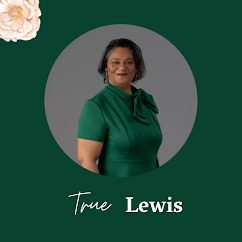
True Lewis
My True Roots
Research Sources and References
PBS, Genealogy Roadshow, Season 2, St. Louis Union Station, February 10, 2015.
Original Genealogy Roadshow research findings, privately held by True A. Lewis, with additional handwritten annotations dated July 2020.
William Ivey and Minta Ivey marriage record, November 5, 1865, Pike County, Alabama.
1870 United States Federal Census, Ridgely, Beat No. 11, Bullock County, Alabama, page 40, dwelling 324, family 324, lines 21–31.
Alabama, Estate Files, 1830–1976, FamilySearch, collection 1978117 — ongoing research.
Alabama County Marriages, 1711–1992, FamilySearch — ongoing Ivey/Ivery marriage cluster research.
Researcher's Note: This article reflects the status of my research as of its publication date. Additional findings, corrections and supporting documentation may be added as the research progresses.


No Comments Yet, Leave Yours!