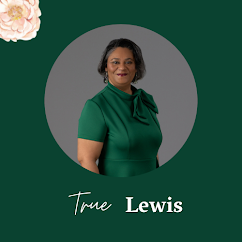
My True Roots Journey to the American Revolution


My True Roots® 

Journey to the American Revolution

My Family's Providence in Alabama into American History 


My Week in Residence at Auburn University

In February 2026, during Black History Month and Alabama’s commemoration of America’s 250th anniversary, I received a once-in-a-lifetime opportunity to serve  residencey at Auburn University.

It was more than a speaking engagement. It was a homecoming, a week of teaching, learning, remembrance, with gratitude.

Before I arrived at Auburn, I went down home.

I returned to Mt. Coney Baptist Church, my family church since 1875. I attended worship, walked among the graves, and spent time remembering the ancestors whose lives made my own journey possible. Before the university classrooms, microphones, museums, and public programs, I needed to stand on the ground where so much of my family’s story began.

That visit gave the entire week a deeper meaning.

I was not simply traveling to Alabama to give a presentation. I was carrying my parents, grandparents, and ancestors with me. I was carrying the stories of people who lived through slavery, emancipation, Reconstruction, migration, military service, family separation, perseverance, and faith.

My presentation, “My True Roots’ Journey to the American Revolution,” traced that family story from the fields of Alabama to Pennsylvania and ultimately to my Revolutionary War Patriot ancestor, Nicholas Barrick.

It was the story of how one family history can hold many American experiences at once.

For years, I have gathered names from census records, military files, church minutes, marriage records, cemetery stones, oral histories, photographs, and family memories. At Auburn, I was given the opportunity to bring those pieces together and share them as a living American story.  


The Email I Almost Did Not Believe

Dr. Mark Wilson guided me throughout this entire experience. As Director of Auburn University’s Caroline Marshall Draughon Center for the Arts and Humanities, he helped make the residency, presentations, community visits, and introductions possible.

I still smile when I remember receiving that first email from Auburn University.

At first, I thought it might be fake.

I wondered, Who from such a prestigious university in Alabama would be emailing me? The invitation seemed almost too extraordinary to believe. My husband encouraged me to look more closely and pointed out that the email address carried Auburn University’s official designation.

He said, in effect, “You may want to answer that email.”

I am so grateful that I did.

What began as an unexpected message became a momentous, once-in-a-lifetime blessing. Dr. Wilson welcomed me, encouraged me, and remained present throughout the week as I shared my family’s journey with students, historians, community members, and organizations across Alabama. 


Teaching at Auburn University

During my residency, I had the honor of speaking with students in two Auburn University history courses at Lowder Hall: Dr. E. Gaddis’s Fundamentals of Public History and Dr. Baltzkonis’s Historian’s Craft.

Each class gave me the opportunity to share how family history can become a doorway into the larger American story. We discussed genealogy, public history, archival research, oral history, and the responsibility historians have to preserve the lives of people whose experiences may not appear in traditional textbooks.

I wanted the students to understand that history is not found only in famous speeches, government documents, or the lives of well-known figures.

History can be found in a grandmother’s Bible, in a church cemetery. It can be found in an agricultural schedule showing what an ancestor planted, raised, and harvested,  military morning reports, marriage licenses issued after emancipation, family photographs, oral traditions, and the memories passed down around a kitchen table.

I shared how my own research began, teaching those classes allowed me to show the students that personal history is not separate from public history. When carefully researched and placed within its proper historical context, one family’s story can help us better understand the history of a community, a state, and the nation.

Honoring My Parents’ Story

One of the greatest blessings of the residency was the opportunity to tell my parents’ story.

Their lives are part of a larger American story involving race, family, adoption, military service, migration, identity, and belonging. I have often said that I was born between worlds. Through genealogy, I learned that those worlds were not separate. They were connected through the people, places, and choices that shaped my life.

Standing before an audience and sharing that journey was emotional.

I understood that I was not speaking only for myself. I was serving as a vessel for the people whose voices were not always recorded, preserved, or welcomed into the official historical narrative. Their names deserve to be remembered.

Reuniting with My Mentor

The week also gave me the precious opportunity to spend time with my mentor, Mr. Dean Spratlan of the Bullock County Historical Society. 

Mentors often see something in us before we fully recognize it in ourselves. Mr. Spratlan has encouraged my research, respected the history of my family and community, and helped me understand the value of placing personal genealogy within the larger historical record.

Seeing him again during this important week made the experience feel complete. It reminded me that none of us does this work alone. Behind every researcher, writer, teacher, and storyteller are people who offered encouragement, opened a door, answered a question, or simply said, “Keep going.”

A Warm Alabama Welcome

Throughout the week, I was welcomed with extraordinary kindness.

I spoke with members of the historic Lee County NAACP #5038.  That gathering connected my family story to the continuing work of citizenship, civil rights, voting, education, and community leadership. I was able to share my Cousin Aaron Sellers and his fight suing the Bullock County Voting Registration Board and the amazing life he had also starting a NAACP Chapter in Bullock County, Alabama and how he testified in the Votings Rights Commission in Montgomery. 

 Elmore County Black History Museum, where I witnessed the importance of preserving local African American history. Community museums like this one protect the names, photographs, documents, and memories that might otherwise be lost. 

Their work reminded me that history does not belong only to large institutions. Some of our most important stories are being preserved in small museums, churches, family collections, and local historical organizations by people who understand exactly what is at stake.


Staying at the Lowrey Guest House at Pebble Hill

During my weeklong residency, I stayed at the Lowrey Guest House, located on the historic Pebble Hill property in Auburn, Alabama.

Built in 2022 through a generous donation from Jacob Lowrey III, the guest house is part of the Caroline Marshall Draughon Center for the Arts and Humanities. It was created as a retreat and residency space for historians, scholars, artists, and others engaged in meaningful cultural and humanities work.

Staying there gave me a quiet and inspiring place to prepare, reflect, and take in the significance of the experience. Each day, I left the guest house to teach, speak, visit historic places, and share my family’s journey. Each evening, I returned to a place designed specifically for people doing the work of preserving and interpreting history.

I was not simply visiting Auburn. I was being welcomed into a space created for historians and storytellers, while carrying the names and experiences of my own family with me. From that peaceful setting at Pebble Hill.

During the residency, I also spent time in Auburn University’s Special Collections and Archives, researching members of my family who lived in Birmingham. Sitting in the archives and examining historical materials connected to my ancestors gave me another opportunity to place their lives within Alabama’s broader history. Greg Schmidt, Head of Special Collections and Archives gave me a wonderful time and talked with me and Dr. Wilson about all they had. 

Sharing the DAR Today Podcast with the Alabama Daughters

Another unforgettable part of my Alabama experience was attending the 128th Alabama State Conference, not only as a visiting Daughter, but as the National Chair of the DAR Today Podcast as guest. 

I was honored to present a workshop explaining why DAR Today is more than simply a podcast. It is a national storytelling, educational, communications, and preservation tool. Through interviews, historical features, committee spotlights, chapter stories, we are preserving the work of Daughters while making that work accessible to members across the country.

During the workshop, I shared ways chapters can apply many of the same ideas at the local level. A chapter does not need a national production team or expensive equipment to begin. Daughters can record oral histories, interview longtime members, preserve chapter memories, highlight service projects, share local history, and create short audio or digital features that help future generations understand what their chapter accomplished.

I was deeply grateful to the Alabama State Regent Malinda Williams for inviting me and for making me feel so welcome. The kindness shown to me throughout the conference was overwhelming. I received so many thoughtful gifts, but the greatest gift was the fellowship. I met new Daughters, formed new connections, and enjoyed conversations that made the experience especially memorable.

There was also a beautiful connection to my years in Pennsylvania. My former Pennsylvania State Regent, Marguerite H. Fritsch, was in attendance as a guest. She now serves as the Organizing Secretary General during the Storage Administration. Her daughter, who also serves as a National Chair, for Celebrate Daughters was there as well.

Seeing my Pennsylvania “daisies” in Alabama brought another part of my DAR journey full circle. They knew me from an earlier season of service, and now they were present as I stood before the Alabama "bees" in my new role as a National Chair.

That moment reminded me that every appointment, every friendship, every chapter experience, and every opportunity to serve becomes part of a much larger journey. 

Coming Full Circle at the Alabama Department of Archives and History 


One of the most emotional moments of the entire trip came at the Alabama Department of Archives and History.

For nearly twenty years, that building had been a kind of sacred place for me. Whenever I traveled down home to Alabama, I found rest there. I found quiet. I found room to think, to search, to contemplate, and to sit among the records of a history that had shaped my family long before I understood how deeply I belonged to it.

It became my secret place.

I could walk through those doors carrying questions, grief, hope, and determination, and somehow leave feeling steadier. Just being surrounded by the documents, exhibits, photographs, and memory held within that place gave me a sense of peace. It reminded me that the lives I was searching for had not disappeared. Their traces were still there, waiting to be found.

After almost twenty years of returning to that institution, I finally met Steve Murray, Director of the Alabama Department of Archives and History, and he gave me a personal tour.

I do not know whether I can fully express what that meant to me.

To be welcomed and shown around by the person leading the institution that had sheltered so much of my own research journey felt almost unbelievable. I felt as though I were walking the red carpet of my life—not because of ceremony, but because of what the moment represented.

It was recognition.

It was gratitude.

For years, I had come to the archives searching for my ancestors. On this trip, I arrived as a historian, a researcher, a writer, a speaker, and a descendant carrying their stories forward.

That personal tour became the quilt that wrapped itself around me the entire week.

Every experience had already been meaningful—the church, the graves, the classrooms, the museum, the archives, the Alabama Daughters, the students, the conversations, and the welcome at Auburn— I had spent so many years entering those doors as someone searching but this time.....the building said: “We remember you. We have watched your journey. Look how far you have come.”   On that day, I felt as though the place that had held me for so long was finally celebrating the journey with me. 

A Black History Month I Will Never Forget

To share this story during Black History Month made the experience especially powerful.

Black history is American history, and my family’s story demonstrates how deeply those histories are intertwined. 

America’s 250th anniversary gives us an opportunity to examine the full sweep of that history—not only the celebrated chapters, but also the difficult ones.

We can honor the ideals of the American Revolution while also telling the truth about those who were excluded from its promises.

We can celebrate freedom while remembering those who continued to struggle for it.

From the fields of Alabama to Pennsylvania, and from Slavery to the American Revolution, this journey showed me again that family history is never just about the past.

It is about who we are. I came back to Alabama carrying the names, stories, courage, sacrifice, and faith of all those who came before me to honor and make sure they are not forgotten.  

We speak their Names


Link to News Article: Elmore County Celebrates America250 with True Lewis’ My True Roots to the American Revolution 


I was asked to submit my presentation in story form and it ended up being published in the Alabama Genealogical Magazine for the Spring/Summer 2026 | Volume 58
A full circle moment! 


Thank you to my Husband, our Sons & Grandchildren & Family for all their support. 


American Patriot - Troy Public Radio's: In Focus My True Roots Journey to the American Revolution


American Patriot: My True Roots to the American Revolution


I was honored to join Carolyn Hutcheson on Troy Public Radio’s In Focus for the “Genealogy in Your Genes” series. In February of 2026. 

During our conversation, I shared how family history, documentary research, and DNA helped me trace my lineage to my Revolutionary War Patriot, Nicholas Barrick. This journey is about more than finding a name on a family tree. It is about understanding how the lives of those who came before us continue to shape our identity, our service, and the stories we preserve for future generations.

Listen to the interview below.

True's Interview on In Focus Troy Public Radio


[Listen on the official Troy University Podcast Network] 


https://today.troy.edu/podcasts/in-focus-with-carolyn-hutcheson/american-patriot-tprs-in-focus-feb-19-2026/

Fall Meeting | Pennsylvania Daughter : September 2023


Pennsylvania State Regent Marguerite Fritsch, who presided over the conference, encouraged members in their “Love of Service to God, Home, and Country,” and spoke on her state project, Old Swedesford Cemetery in Chester, where John Morton, a signer of the Declaration of Independence, is buried. Mrs. Fritsch reminded members that October 11, 1890, is the day the DAR was founded, and on or close to that date each year, chapters across the state conduct service projects. In fact, this year, many will be gathering at Old Swedes Burial Ground, Chester, where Signer of the Declaration of Independence, John Morton, is buried, for an official state-sponsored service project.

Members participated in committee meetings, business meetings, and socials. The conference workshops covered a wide range of topics, including Telling our DAR Story to the Public with Sparkle and Bloom, DAR Awards and Recognition for non-DAR Members, Successful Officer Transition and Succession Planning, Safeguarding Your Chapter’s History, and Service Projects from Start to Finish.

Several certificates and pins were presented for outstanding leadership and volunteerism. In recognition of the 125th anniversary of the Army Nurse Corps, the DAR honored all nurses from the Society for their heroic work. Recipients inspired attendees through their charitable endeavors and unwavering love of God, Home, and Country. 


Telling our DAR Story with Sparkle & Bloom

Forgotten Patriots – African American and American Indian Patriots in the Revolutionary War


The second edition of Forgotten Patriots (2008) identifies over 6,600 names of African Americans and American Indians who contributed to American Independence and is a nearly five-fold expansion in pages over the 2001 edition. 

Now available as a free PDF download, this 874 page document contains details of the documented service of the listed Patriots, historical commentary on happenings of the time, an assortment of illustrations, and an extensive bibliography of research sources related to the topic.

Following an introduction that provides context to the service of these often overlooked Patriots and the challenges faced in documenting their service, the book organizes its findings into chapters that include historical commentary, sources cited, names of identified Patriots and a bibliography directly related to each state and region of the country. Additional chapters also cover miscellaneous naval and military records, foreign allies, and the West Indies.

Seven appendices are included to elaborate on topics not often addressed in other publications:

  • Map of the Enslaved Population, 1790 Census
  • Documenting the Color of Participants in the American Revolution
  • Names as Clues to Finding Forgotten Patriots
  • The Numbers of Minority Participants in the Revolution
  • Glossary of Terms Used
  • Master List of Source Abbreviations Used in This Book
  • Contacting the DAR

Just as important to researchers will be the vast array of thousands of sources found in the book's extensive bibliography that provides a roadmap for those seeking to discover even more information on the topic.

The Forgotten Patriots research guide is an indispensable tool for students, scholars, historians, and genealogists interested in the important contributions of African Americans and American Indians in America's fight for Independence. On an additional level, the hope is that it will also encourage the female descendants of these patriots to join the important volunteer and educational work of the DAR. 


Honoring Our Patriots


Post is dedicated and in Honor to all those Forgotten Patriots who are no longer Forgotten. 

From your Daughter of the American Revolution

True Lewis, Pennsylvania State Society 


The Negro Speaks of Rivers


I’ve known rivers:
I’ve known rivers ancient as the world and older than the flow of human blood in human veins.

My soul has grown deep like the rivers.

I bathed in the Euphrates when dawns were young.
I built my hut near the Congo and it lulled me to sleep.
I looked upon the Nile and raised the pyramids above it.
I heard the singing of the Mississippi when Abe Lincoln went down to New Orleans, and I’ve seen its muddy bosom turn all golden in the sunset.

I’ve known rivers:
Ancient, dusky rivers.

My soul has grown deep like the rivers.

Langston Hughes. "The Negro Speaks of Rivers" from the The Collected Works of Langston Hughes. 

Printfriendly